How Florists Should Dispose of Damaged Floral Foam
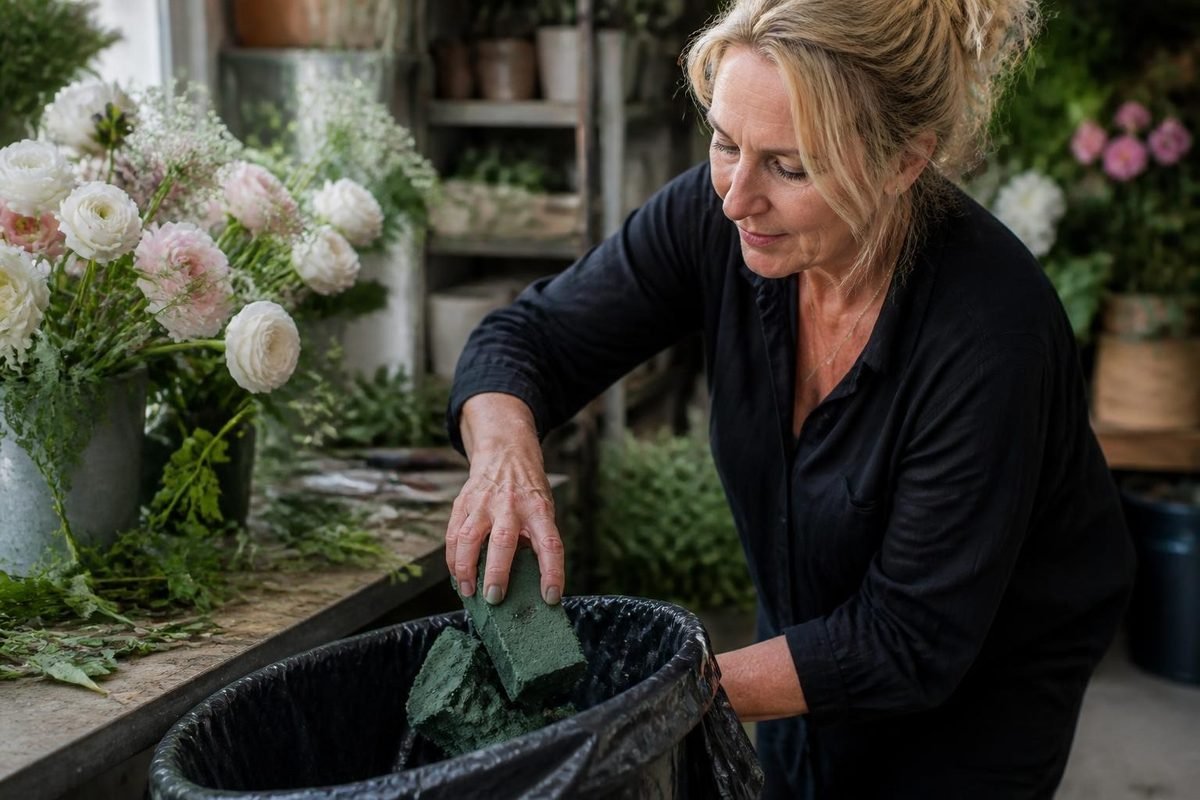
Put damaged floral foam in a sealed bag and dispose of it with your general waste, following your local waste rules. Keep crumbs and foam water out of drains, compost, and recycling bins.
Contain the foam first
Move damaged blocks and loose pieces into a sturdy bag as soon as you finish working with them. Small fragments can scatter across a bench or floor and are harder to collect later. Handle the foam gently rather than breaking it into smaller pieces.
If the foam is already wet, let excess water drain into a container before bagging it. Do not squeeze it out over a sink. If the bag is thin or has a tear, place it inside a second bag and tie it securely.
Keep a dedicated waste container close to your work area. A bin with a liner gives you a place for damaged blocks, trimmings, and the small bits left after making arrangements. Empty it before the liner becomes too heavy to lift without tearing.
Clean up crumbs and water
Use a damp cloth or paper towel to gather small particles from your work surface. Put the used towel in the waste bag with the foam. For larger pieces, pick them up carefully rather than brushing them onto the floor or into a sink.
Water that has held floral foam can contain tiny particles. Collect it in a container instead of pouring it straight down the drain. You can use a fine filter, such as a coffee filter, to catch visible material, then put the used filter in the waste bag. Ask your local waste or water authority how to dispose of the remaining water in your area.
- Keep foam scraps out of compost and garden soil.
- Do not put floral foam in household recycling unless your local program specifically accepts it.
- Do not wash crumbs down a sink or outdoor drain.
- Close waste bags securely before placing them in your general waste bin.
Check your local requirements
Waste collection rules differ by location, especially for businesses. Your local council, waste authority, or commercial waste collector can tell you how to dispose of floral foam and any water used with it. If you handle large quantities, ask about suitable containers and collection arrangements.
Keep those instructions somewhere your team can see them. A simple note beside the workbench and waste bin can help everyone follow the same routine during a busy shift.
Reduce waste in the workshop
Cut foam carefully to fit the container, and keep usable pieces together for arrangements where they can still provide support. Do not reuse foam that has lost its ability to hold stems securely. A damaged piece may let an arrangement shift or fall apart.
You can also consider arrangements that use a vase, a flower frog, or a grid of reusable wire instead of foam. The right choice depends on the flowers and the design, but using less foam means less material to dispose of.
A few careful habits at the bench make cleanup simpler. Contain the foam, collect the crumbs, and check local guidance whenever you are unsure.
A useful next read: https://tiffest.com/flowers-on-set-and-at-premieres-how-events-use-floral-design/